What Fireblood tastes like, in short
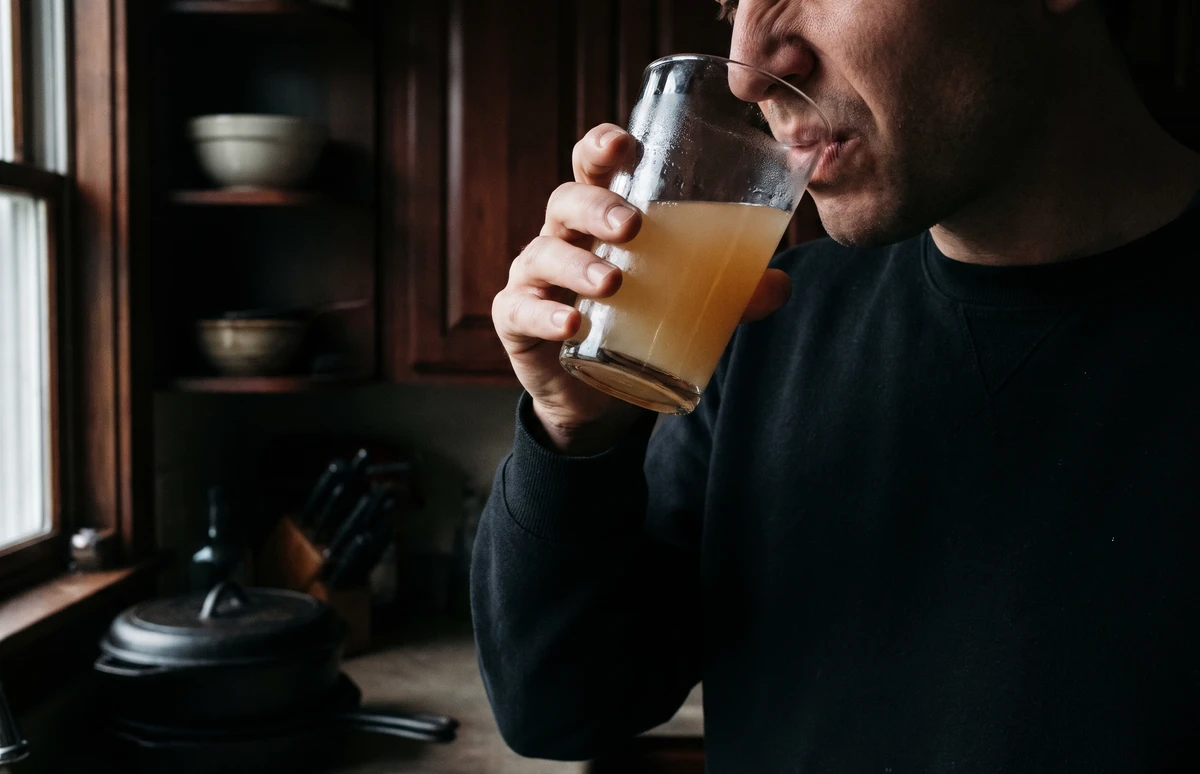
Fireblood tastes bitter, sour and faintly metallic, with no sweetness to cover any of it, because it is an unflavored powder made of vitamins, minerals and amino acids. Fireblood says so itself: its FAQ answers the taste question with one word, “Bad,” and explains that it tastes like raw vitamins and minerals because that is what it is.
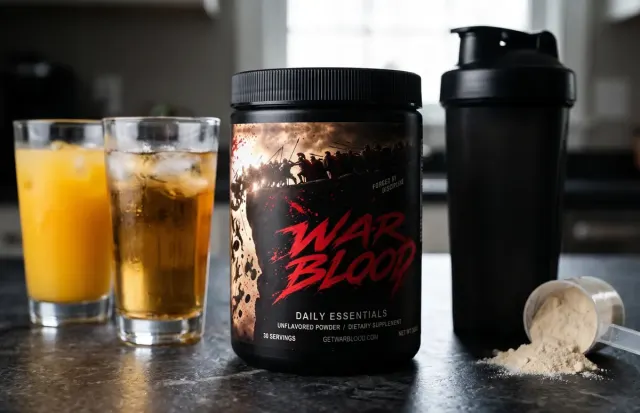
That honesty is useful. You know what you are getting before you open the tub, and you can plan around it. Most people who stick with it mix it into orange or apple juice, which is exactly what Fireblood’s FAQ recommends.
Is Fireblood spicy? No. The name is branding. Nothing on the published label, such as pepper extract or capsaicin, would make it hot. The strong taste comes from the nutrients, not from heat.
Why Fireblood tastes bad: no flavoring, no sweeteners
Most supplement powders that taste pleasant get there with a flavor system: sweeteners such as sucralose or stevia, natural or artificial flavors, and sometimes added acids to balance them. Fireblood leaves all of that out. Its homepage says “No sweeteners, no sugar,” and its Andrew Tate page frames the decision as “function over flavour,” arguing that flavorings would take up room in the scoop.
Whatever you think of that argument (we look at it closely in Does bad taste mean a supplement works?), the practical result is simple. There is nothing in the tub whose job is to make it taste good, so you taste the ingredients directly. If you want the general background on what “unflavored” does and does not promise, see Unflavored does not mean tasteless.
Which Fireblood ingredients drive the taste
We can’t tell you exactly how much each ingredient contributes to the overall taste, and nobody outside the factory can. What we can do is point to the ingredients that are present in large amounts and that are commonly described as strong-tasting. Amounts below are from Fireblood’s published label.
| Ingredient group | Amount per scoop | Likely taste contribution |
|---|---|---|
| Essential amino acids (leucine, valine, isoleucine and six others) | About 5.1 g combined | Bitterness; free amino acids such as leucine and isoleucine are commonly described as bitter |
| L-Methionine | 349.5 mg | Contains sulfur and is often described as having a sulfurous note |
| Vitamin C (ascorbic acid) | 500 mg | Sourness; ascorbic acid is an acid |
| B vitamins (thiamine HCl, riboflavin 5′-phosphate and others) | Milligram amounts, e.g. B1 12 mg, B2 10 mg | Bitter, “vitamin” taste and smell; riboflavin also tints the drink yellow |
| Minerals (potassium chloride, zinc, magnesium and others) | e.g. potassium 100 mg, magnesium 100 mg, zinc 11 mg | Salty, flat or metallic edges |
| OptiMSM | 500 mg | Commonly reported as mildly bitter |
| Glycine | 1,000 mg | Mildly sweet; glycine is one of the few ingredients pulling the other way |
Fireblood’s own blog makes a similar point: amino acids bring bitterness, vitamin C brings sourness and minerals add a metallic edge (its bitter-taste guide). Notice what is not on the list: vitamin D3, vitamin B12, selenium and other microgram-level nutrients are present in amounts far too small to taste. For the full label line by line, see our Fireblood ingredients breakdown.
What Fireblood and its customers say about the taste
Fireblood leans into the taste rather than hiding it. Its Andrew Tate page answers “Does it taste good?” with “No,” followed by a tip: mix it with orange juice, which the page says “eliminates 95% of the taste.” That figure is Fireblood’s claim, not a measurement we can verify, but it matches the general advice that juice helps.
The reviews Fireblood chooses to display tell the same story. A review on its homepage, from a customer named Paul H., ends with “Tastes terrible, wouldn’t change it!” In other words, customers who like the product mostly accept the taste as the price of a powder with no sweeteners, rather than saying it tastes fine.
If the taste is the main thing stopping you from finishing a tub, that is worth taking seriously. A supplement you skip does nothing for you, which is why we wrote a whole guide on making unflavored powder easier to drink.
Does WARBLOOD taste the same as Fireblood?
Expect the same kind of taste. WARBLOOD is also unflavored with no sweeteners, and its label is nearly identical to Fireblood’s: the same vitamin and mineral doses, the same forms, the same MSM, taurine and proline, and 7 of 9 essential amino acids at the same amounts.
The differences are small and specific. WARBLOOD has 32 mg NE of vitamin B3 (vs 31 mg), 982 mg of L-leucine (vs 992 mg), 348.5 mg of L-methionine (vs 349.5 mg), and 500 mg of glycine (vs 1,000 mg) with 500 mg of added Celtic sea salt in its place. That brings sodium to 216 mg (vs 40 mg) and chloride to 420 mg (vs 148 mg).
On paper, that means a little more salt and a little less of the mildly sweet glycine. We are not going to tell you it tastes better or worse; it is still a powder dominated by vitamin, mineral and amino acid taste, and juice helps for the same reasons. Every amount is listed on our ingredients page, and the full side-by-side is in WARBLOOD vs Fireblood.
How to make it easier to drink
The fixes that work best for unflavored powders are low-tech:
- Mix it into orange or apple juice instead of plain water. Sugar and acid reduce how bitter a drink seems.
- Keep it cold. Fridge-cold liquid and a few ice cubes help.
- Use less liquid and drink it fast. A short glass finished in a few swallows beats sipping a big bottle for twenty minutes.
- Dissolve first. WARBLOOD’s label suggests pouring about an inch of hot water over the powder in a cup, stirring until dissolved, then adding juice or water with ice. Never seal hot liquid in a shaker.
- Line up a chaser, such as a glass of water or something you like, to clear the aftertaste.
Each of these, plus a few more, is explained step by step in How to make unflavored supplement powder taste better. Whatever you try, stick to one scoop; more powder in the glass just means more taste.
WARBLOOD and Fireblood: the short version
Fireblood tastes bad by design: no flavoring, no sweeteners, and gram-level amounts of amino acids, vitamin C and minerals that you taste directly. It is not spicy. Juice, cold liquid and a quick finish make it manageable. WARBLOOD is also unflavored with a nearly identical label, so expect the same kind of taste, at 10% less than each Fireblood option. Not sure which to choose? Read Is Fireblood worth it? or see WARBLOOD’s plans.
Sources & transparency
- Fireblood FAQ
- Fireblood: Andrew Tate on Fireblood
- Fireblood ingredients (full label)
- Fireblood blog: How to get rid of the bitter taste in supplement drinks
WARBLOOD is not affiliated with, endorsed by, or connected to Fireblood, MWDH Health Ltd, or Andrew Tate. Fireblood is a trademark of its owner and is named here only to compare products. Fireblood details come from getfireblood.com as checked on the date above; prices and formulas can change. See our legal notice.
WARBLOOD owns this publication and sells the product discussed. Comparisons identify their sources and do not imply independent product testing. How our content is prepared.